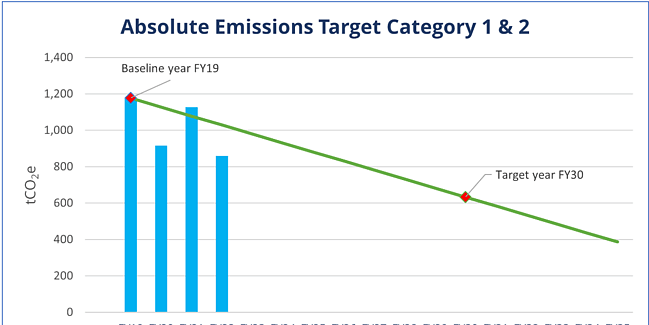
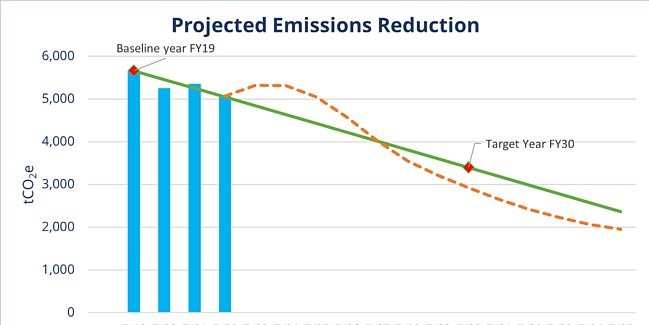
Example emissions reduction target for category 1 & 2 emissions, against a 1.5°C scenario.
Carbon Accounting is what we do!
Greenhouse Gas Inventory
At CarbonEES®, we specialise in delivering Toitū-aligned, audit-ready Greenhouse Gas (GHG) Inventories that meet the expectations of New Zealand’s public sector. We support organisations from start to finish, ensuring accuracy, transparency, and confidence at every stage of the reporting and verification process.
We prepare organisational Greenhouse Gas Inventories and Inventory Reports in accordance with the GHG Protocol and ISO 14064-1, which form the technical foundation for Toitū carbonreduce® and carboNZero® certification, and are widely recognised across central and local government.
Designed for public and private sector accountability. Public-sector organisations face heightened scrutiny, tight reporting timeframes, and a strong expectation of defensible data. CarbonEES® understands these requirements and delivers inventories that support:
Toitū certification and recertification
Emissions reporting under the Carbon Neutral Government Programme (CNGP)
Annual reporting, long-term planning, and assurance processes
Clear audit trails suitable for OAG and independent verification
We work with you to define organisational and operational boundaries that align with Toitū and public-sector guidance, ensuring consistency year-on-year and reducing audit risk.
End-to-end inventory development — not just advice
CarbonEES® provides practical, hands-on support well beyond advisory services or software tools. We assist with:
Data collection and entry
Chasing suppliers and utilities for missing or corrected information
Calculating complex emissions sources such as wastewater treatment, fleet fuel, refrigerants, employee commuting, and leased assets
Applying conservative, Toitū-acceptable assumptions where data gaps exist
This approach significantly reduces the internal resourcing burden on public-sector teams while improving data quality.
Audit-ready data, managed through e-Bench®
Your GHG data is managed using CarbonEES®’ e-Bench® software, purpose-built to support large, complex organisations with multiple data sources. e-Bench® helps ensure:
Consistent reporting periods
Identification of estimated reads, reversals, and anomalies
Transparent version control and audit trails
Faster, smoother verification processes
Our experience reviewing energy invoices and supplier data frequently identifies errors and inefficiencies, often leading to energy and cost savings for our clients.
Toitū audit
Toitū verification can be demanding. CarbonEES® supports you throughout the audit process by:
Preparing structured, auditor-friendly evidence packs
Clearly documenting methodologies and assumptions
Being on call during audit days to answer verifier questions in real time
This reduces follow-up requests, shortens audit timelines, and gives your organisation confidence that issues will be resolved quickly and professionally.
Why CarbonEES® vs in-house or software-only approaches In-house GHG inventory development
Many organisations attempt to prepare their GHG inventory internally. While this can appear cost-effective, it often creates hidden risks and resourcing pressures—particularly in the public sector.
Common challenges with in-house approaches include:
Significant staff time spent collecting, cleaning, and validating data
Difficulty interpreting GHG Protocol, ISO 14064-1, and Toitū requirements
Limited experience with complex emissions sources (e.g. wastewater, refrigerants, leased assets, employee commuting)
Increased audit risk due to undocumented assumptions or inconsistent methodologies
Loss of institutional knowledge when staff change roles
CarbonEES® removes these risks by providing experienced practitioners who apply consistent, Toitū-aligned methodologies year on year—while freeing internal teams to focus on policy, planning, and emissions reduction delivery. Software-only GHG reporting tools, GHG software platforms can be useful data repositories, but they do not replace technical expertise or audit support.
Limitations of software-only solutions include:
Responsibility for data collection and validation remains with your team
Limited support for chasing suppliers, resolving anomalies, or correcting invoices
Generic emission factors and assumptions that may not meet Toitū or verifier expectations
Minimal assistance during verification, leaving teams exposed during audits
CarbonEES® combines software with expert delivery.
Our e-Bench® platform is supported by hands-on specialists who actively manage data quality, resolve issues, and prepare audit-ready evidence—ensuring the system works for you, not the other way around.
CarbonEES® is purpose-built for organisations that require defensible, transparent, and verifiable emissions data. Our approach reduces audit risk, shortens verification timelines, and ensures your GHG inventory stands up to Toitū, OAG, and public scrutiny.
By choosing CarbonEES®, you gain:
Confidence your inventory meets certification and public-sector expectations
Fewer audit findings and follow-up actions
More time for your team to focus on real emissions reduction outcomes
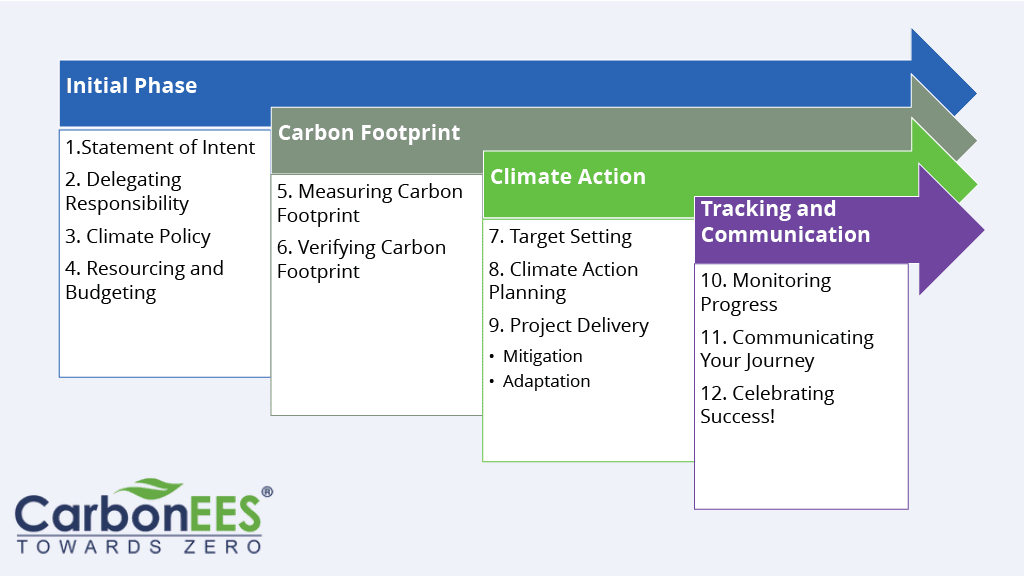
After reviewing the Carbon Journey framework, you may find you need to spend more time developing your climate policy or allocating resources before jumping into the Climate Action Planning (Emissions reduction plan) stage. However, if you are ready to forge ahead, here are the next steps:
Step 2. Setting emissions reduction targets
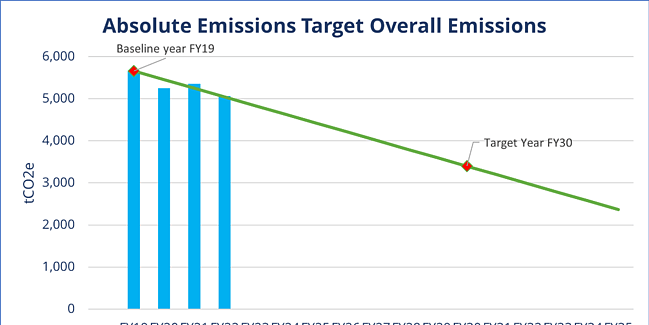
To build a plan, you need to know where you are going. Once you have your reduction targets set, you can chart a course to get there. It's important that organisational targets are in line with the 1.5°C target set by the Paris Agreement for the sake of validity, and against the guidelines of the Science-Based Targets Initiative (SBTi). This can be calculated by using an absolute contractions approach and/or by using an emissions intensity (e.g., tonnes of CO2e per FTE).
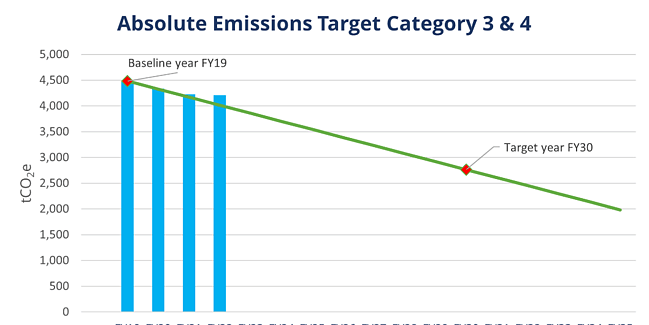
The SBTi’s target-setting process involves calculating a near-term target against your organisations category 1 and 2 emissions, and the option to calculate an emissions reduction target against your category 3 and 4 emissions.
Step 3. Identification of Emissions Reduction factors
The next step is to identify the most important factors that need to be considered when deciding between decarbonisation projects. These could include:
cost
timeframe
emissions reduction potential
wider sustainability benefits
amount of behavioural change required / ease of implementation
Then, it makes sense to weigh these variables against each other using multi-criterion decision making (MCDM) methodologies, to understand what matters most to your organisation when approaching decarbonisation. From there you can rate decarbonisation projects against these criteria, helping decide which projects to undertake, and in what order.
Step 4. Decarbonisation projects analysis
Now you are ready to analyse potential decarbonisation projects. We recommend taking the following steps in your analysis:
Identify decarbonisation projects that would help your organisation reduce emissions, ideally through a workshopping activity.
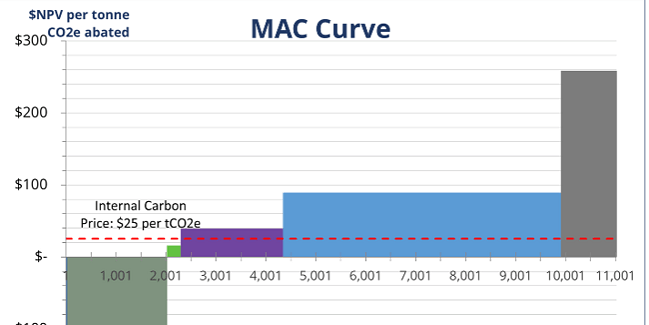
Decide on an internal carbon price for your organisation (e.g., $25 per tonne of CO2e).
Calculate the net present value (NPV) and emission savings of each decarbonisation project.
Place each decarbonisation project against a marginal abatement cost (MAC) curve, where the x-axis will describe the abatement potential (tonnes CO2e) and the y-axis will describe the abatement cost (per tonne of CO2e, with negative values indicating cost-savings).
Analyse each decarbonisation project using MCDM methodologies, to prioritise projects based on the factors identified in step 3.
Project emissions reductions year on year against the emissions reduction target and your organisation’s actual emissions.
This stage of the process will be the most time intensive and will require collaboration within your organisation.
Step 5. Write your emissions reduction planYou are now ready to produce an emissions reduction plan, based on the calculated emissions reduction targets and the analysis of different decarbonisation projects. This will allow your organisation to start incorporating emissions reduction efforts into their greater sustainability strategy, and to start budgeting for decarbonisation projects.
Location
1/139 Randwick Road
Lower Hutt
Phone
64 21 2239273